
Restroom Trailer Capacity Guide
Restroom trailer capacity is not a single guests-per-unit calculation. The right plan depends on attendance, daily population, operating hours, peak periods, alcohol service, other available restrooms, waste capacity, freshwater support and whether the trailer can be serviced during use.
Confirmed Equipment Facts
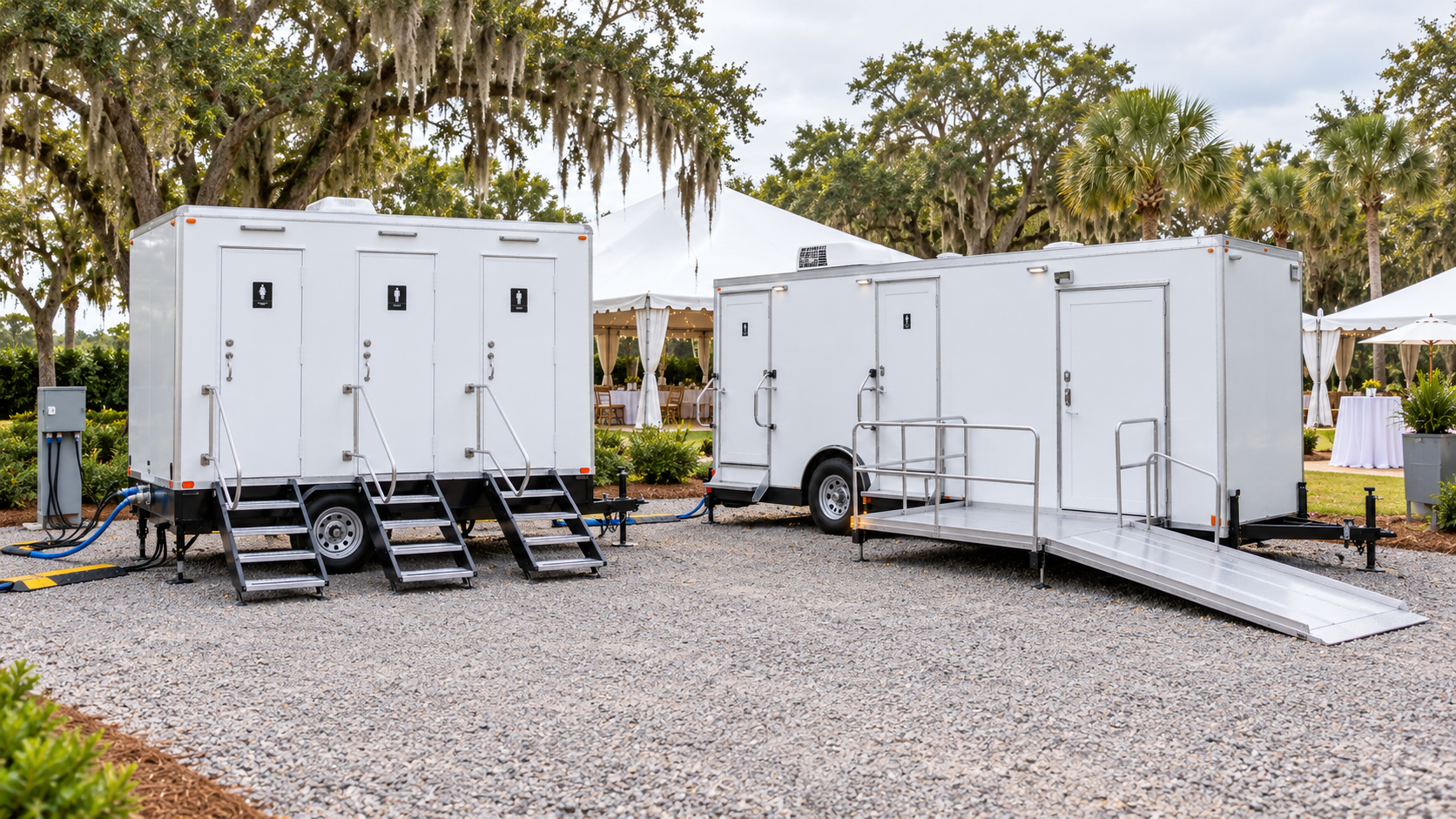
The Flush Crew Co. uses equipment with different layouts and tank capacities. A three-station trailer may use a 200-gallon waste tank, while an ADA+2 configuration may use a 375-gallon waste tank. The exact trailer assigned to the job—and the written quote—controls. Freshwater capacity and utility requirements must also be confirmed for the specific unit rather than assumed.
The Five Capacity Questions
1. How many people will use the trailer?
For an event, provide total attendance and the number of hours the trailer will be open. For commercial or construction work, provide the daily population, number of shifts and days per week.
2. When will demand peak?
Ceremony breaks, meal periods, shift changes and event closings can create short periods of heavy use. A layout with enough total tank volume may still feel undersized if too many users arrive at once.
3. Will alcohol be served?
Alcohol service often increases restroom use and freshwater demand. It should be identified during planning instead of treated as an afterthought.
4. Are other restrooms available?
Existing restrooms, portable toilets or separate employee facilities can reduce demand on the trailer. Tell us what will actually remain open and usable during the rental.
5. Can the trailer be pumped or serviced during the rental?
Multi-day and long-term projects may be supported with scheduled pump-outs, freshwater refills and cleaning. The service vehicle must be able to reach the trailer without disrupting operations or crossing an unsafe surface.
Event Capacity Versus Long-Term Capacity
A one-day wedding has different operating conditions than a trailer supporting a construction crew for twelve weeks. Event planning emphasizes attendance, duration, peak periods and guest experience. Long-term planning emphasizes average daily use, shifts, tank monitoring, pump frequency, cleaning, consumables and reliable access for recurring service.
Waste Capacity Is Not the Same as Guest Capacity
Tank size places a physical limit on the system, but gallons alone do not predict the number of people a trailer can support. Flush volume, sink use, event duration, drinking patterns, employee shifts and pump access all affect real capacity. We use tank specifications as one input, not as a stand-alone promise.
Freshwater and Electrical Planning
Some sites provide suitable water and power; others require onboard supply, freshwater support or a generator. Connection distance, hose or cord routing, amperage, weather exposure and backup plans can affect placement. Standard freshwater service should not be assumed to be potable drinking water. Potable requirements must be identified and arranged separately.
When to Consider More Capacity
Consider a larger trailer, an additional unit or a planned mid-service when the operating window is long, alcohol is served, attendance is concentrated, the rental spans multiple days, the site has no other restrooms, pumping access is limited or failure would seriously disrupt the event or job.
Capacity Planning FAQs
Can you guarantee a guest count from the tank size alone?
No. We can recommend equipment using the full operating picture, but tank volume by itself cannot guarantee capacity for every event or worksite.
How often does a trailer need to be pumped?
It depends on actual use, tank size, rental duration, other available facilities and whether water consumption is higher than expected. Long-term schedules should be adjusted from observed use rather than left unchanged if conditions differ.
Does an ADA+2 trailer always replace a three-station trailer?
No. Accessibility, layout, waste capacity, guest flow and placement all matter. The best choice depends on the site and the people being served.
What information produces the best recommendation?
Send the address, dates, attendance or daily population, operating hours or shifts, alcohol plans, available restrooms, power and water conditions, surface and access details, and whether service vehicles can return during the rental.
Request a Capacity Recommendation
Send the real site conditions and schedule. We will recommend a trailer and service plan based on confirmed equipment, not an inflated universal capacity claim.
Related planning: Review the Utility & Site Requirements Guide and Pumping Frequency Guide before finalizing a long-term or high-use rental.