
How Often Should a Restroom Trailer Be Pumped?
There is no reliable universal pumping interval for every restroom trailer rental. The correct schedule depends on the assigned trailer, waste-tank capacity, number of users, operating hours, water consumption, rental duration and whether other restrooms remain available. A good plan uses confirmed equipment specifications and adjusts to observed use.
Tank Size Is the Starting Point—not the Schedule
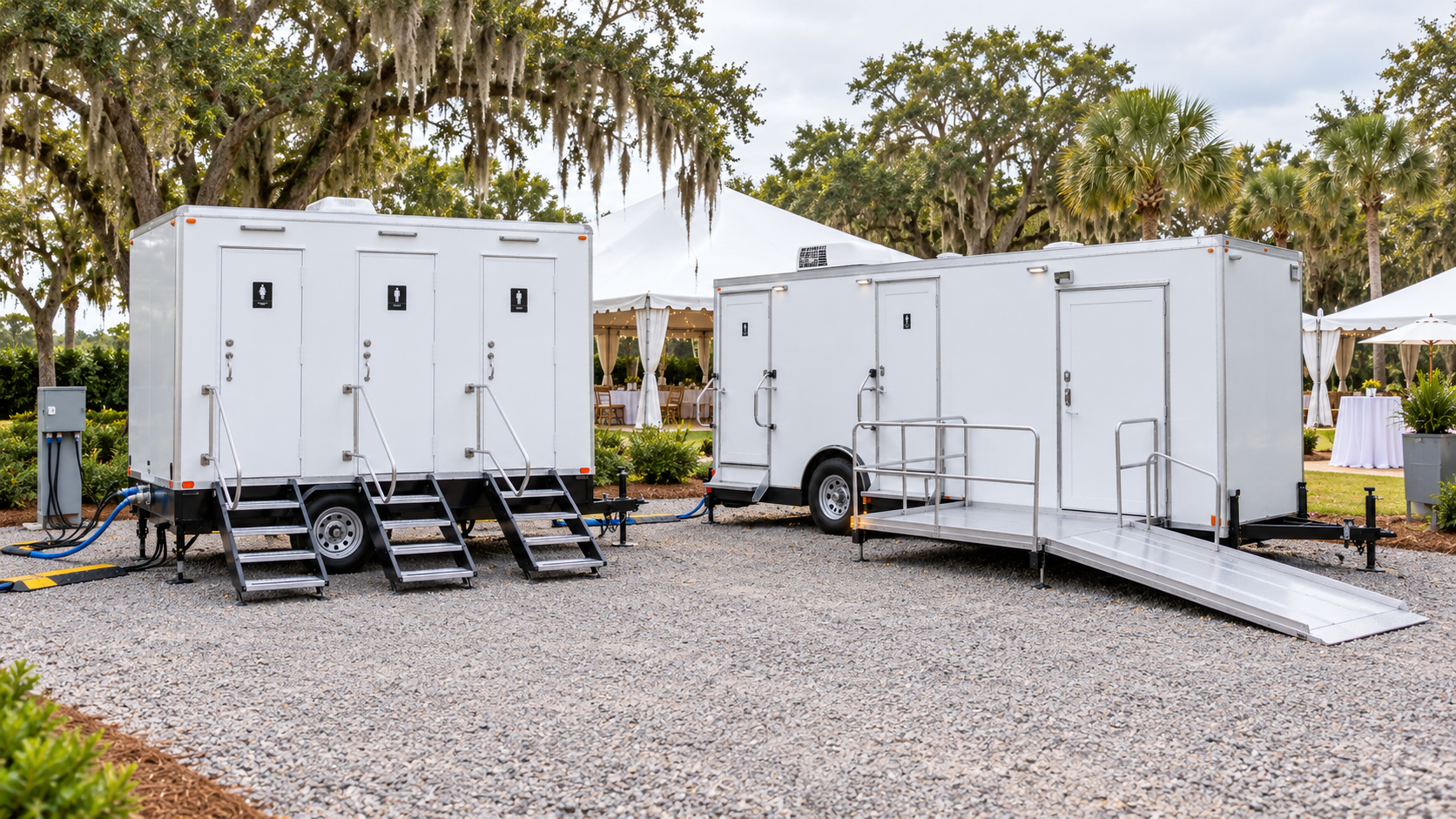
The Flush Crew Co. operates different trailer configurations. A three-station trailer may use a 200-gallon waste tank, while an ADA+2 configuration may use a 375-gallon waste tank. The exact trailer assigned to the job and the written quote control.
Those figures describe physical tank volume. They do not create a guaranteed guest count or a fixed number of days between pump-outs. Flush volume, sink use, peak demand and the amount of wastewater already in the system all affect usable capacity.
The Variables That Change Pumping Frequency
How many people will use the trailer?
For events, provide total attendance and the hours the trailer will operate. For construction, office or commercial use, provide the daily population, shifts, days per week and whether subcontractors or visitors will also use the unit.
How long is the operating window?
A four-hour event differs from an all-day festival. A trailer supporting one daytime shift differs from a facility operating around the clock. Longer hours increase cumulative use and may require an earlier service window.
Will alcohol be served?
Alcohol service often increases restroom visits and water demand. It should be included in the original estimate rather than discovered after the event begins.
Are other restrooms available?
Open, functioning restrooms elsewhere onsite can reduce demand on the trailer. If those facilities close, fail or become restricted, actual use may rise quickly.
How much water is entering the waste system?
Waste capacity is affected by both toilet use and sink water. Leaks, unusually high handwashing demand or operational problems can consume tank capacity faster than expected.
Event Rentals Versus Long-Term Rentals
For a one-day event, the goal is usually to select enough starting capacity and control the operating window so pumping is not required while guests are present. Large attendance, long hours or concentrated demand may justify a planned mid-service before the event ends.
Long-term rentals should use a recurring plan based on daily population, shifts and actual tank behavior. The first service interval may be intentionally conservative. After observing real use, the schedule can be adjusted instead of relying indefinitely on the original estimate.
Scheduled Pumping Versus On-Call Service
Scheduled service is usually the stronger option when the trailer supports daily operations, remains onsite for multiple days, has predictable traffic or would seriously disrupt a job if unavailable.
On-call service may supplement the plan when use is variable, but it should not replace capacity planning. Availability, travel time, site access and operating hours can prevent an immediate response.
The safest approach is to plan service before the trailer reaches a critical level and preserve an access route for the pump truck.
Signs the Service Plan Needs Adjustment
Do not wait for a complete backup to reconsider the schedule. Contact the service provider when observed use is significantly higher than expected, other onsite restrooms become unavailable, water use rises, tank monitoring indicates faster filling or the service route will soon be restricted.
Slow fixtures, unusual odors, leaks or other operating problems may indicate a maintenance issue rather than a normal full tank. Stop using affected equipment when necessary and report the condition instead of attempting an improvised repair.
Service Access Matters
A pumping schedule only works if the service vehicle can reach the trailer. Keep gates, drives and hose routes clear. Avoid placing tents, fencing, storage containers, parked equipment or event infrastructure across the planned service path.
Active sites should establish a safe service window, traffic control and any required escort or credentialing before the truck arrives. Review the Utility & Site Requirements Guide before final placement.
Build a Better Pumping Plan
Provide the trailer configuration, waste-tank size, dates, operating hours, attendance or daily workforce, shifts, alcohol plans, other available restrooms, water source and whether a service truck can return during the rental. For an existing office trailer or temporary facility, also provide the holding-tank size and observed usage history.
Use the Restroom Trailer Capacity Guide to evaluate the broader operating plan. For scheduled service in the Charleston area, review our Restroom Trailer Pumping Service.
Pumping Frequency FAQs
Should every restroom trailer be pumped daily?
No. Daily service may be appropriate for some high-use or critical operations, but it would be unnecessary for many other rentals. The decision should follow actual demand and tank capacity.
Can a trailer simply be pumped when it is full?
Waiting until the system is at its limit creates avoidable risk. Long-term and high-use rentals should be serviced before capacity becomes critical.
Does a larger tank always mean fewer pump-outs?
Not automatically. A larger tank can provide more volume, but a larger user population, higher water use or longer operating hours can consume that capacity just as quickly.
Can the trailer be pumped while people are onsite?
Potentially, if the site provides safe vehicle access and a controlled service window. For events and active shifts, advance coordination is preferable to an emergency response.
Request a Service Recommendation
Send the actual site conditions and operating schedule. The Flush Crew Co. will recommend a pumping plan based on confirmed equipment and expected use—not a one-size-fits-all interval.