

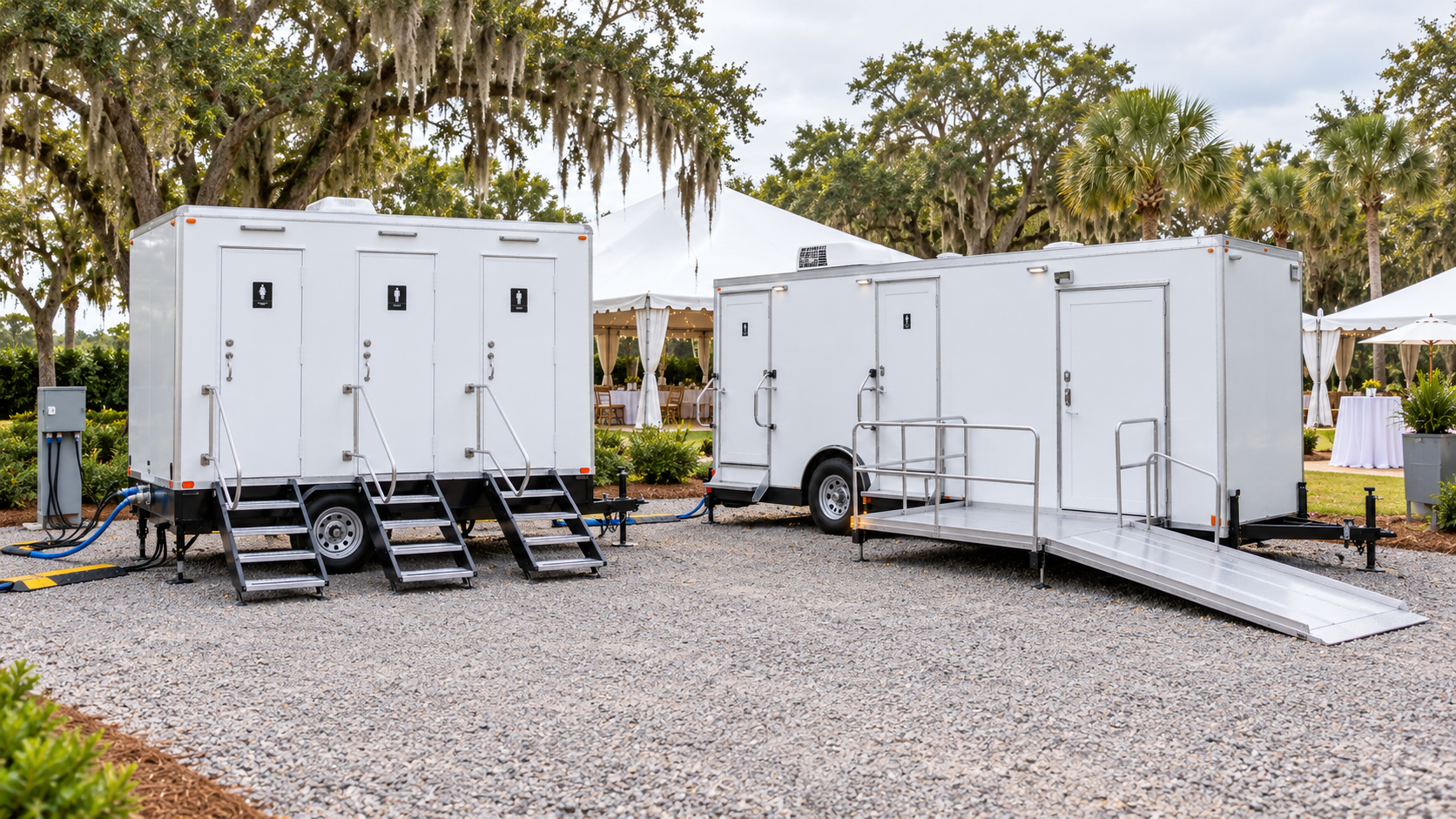
Restroom Trailer Utility & Site Requirements
A restroom trailer can be the right size for an event or project and still fail operationally if the site cannot support delivery, setup or servicing. Before scheduling a trailer in Charleston, Dorchester or Berkeley County, confirm the route, placement area, power, water and service access for the specific unit assigned to the job.
Start With the Delivery Route
The delivery path must accommodate the tow vehicle and trailer—not just the trailer’s final footprint. Confirm gate width, turning room, overhead clearance, tree limbs, wires, soft shoulders, curbs and any tight approach angles. Historic properties, waterfront venues, rural roads and active construction sites often require more coordination than an open paved lot.
A driver also needs room to position, level and later retrieve the unit. A location that looks open on a site plan may become inaccessible after tents, dumpsters, material deliveries, parked vehicles or temporary fencing are installed.
Choose a Firm, Reasonably Level Placement Area
Restroom trailers should be placed on a firm surface that can support the trailer, stabilizers and guest traffic. Pavement and compacted gravel are generally easier to evaluate than loose sand, saturated soil or recently disturbed construction areas. Surface conditions can change after heavy Lowcountry rain, so the delivery-day condition matters.
Minor leveling may be possible, but a steep or irregular location can interfere with safe stairs, ramps, doors and tank operation. ADA-accessible units also require enough room for the ramp and a practical accessible route from the event or work area.
Confirm Electrical Requirements for the Assigned Trailer
Restroom trailers may require electrical power for lighting, climate control, pumps and other onboard systems. Do not assume that any nearby household outlet is sufficient. Confirm the voltage, amperage, connection type and number of circuits for the specific trailer in the written operating plan.
Measure the actual cable route, not a straight line on a map. Avoid vehicle lanes, standing water, sharp edges and unprotected pedestrian crossings. If site power is unavailable or unreliable, a properly sized generator may be required. Generator placement must also account for ventilation, noise, refueling and protected cord routing.
Plan Water Supply and Hose Routing
Some units can connect to an approved onsite water source; others may use onboard freshwater or arranged refill support. Confirm water availability, pressure, connection type and distance before delivery. Long runs, elevation changes and restricted routing can affect the plan.
Freshwater supplied for restroom and sink systems should not automatically be treated as drinking water. Potable-water requirements must be identified and arranged separately. For office trailers and temporary facilities, review our holding-tank and freshwater service information.
Protect Waste and Service Access
The trailer’s waste tank is only one part of the operating plan. If the rental may require pumping, cleaning or freshwater service, the service vehicle needs a safe route back to the unit. Do not place permanent fencing, tents, stored materials or parked equipment across that route after setup.
For an event, servicing is usually best completed before guests arrive or during a controlled access window. Active worksites should identify traffic-control requirements, shift changes and any escort or badging procedures in advance. Review the restroom trailer pumping service page for recurring and mid-rental support.
Weather and Seasonal Conditions
Wind, flooding, saturated ground, freezing temperatures, extreme heat and power interruptions can affect delivery and continued operation. Charleston-area coastal weather can also change access conditions quickly. The placement and contingency plan should protect guests and workers without blocking emergency routes or drainage.
When severe weather is expected, safety takes priority over the preferred setup schedule. A backup location or revised delivery window may be necessary.
Site-Planning Checklist
Before requesting a final recommendation, provide:
• Full address and onsite contact
• Delivery, setup and pickup windows
• Gate width, turning room and overhead restrictions
• Surface type, slope and recent weather conditions
• Proposed placement dimensions
• Power source, distance and circuit information
• Water source, pressure and hose-route distance
• ADA and accessible-route needs
• Service-truck access during the rental
• Event attendance or daily workforce and operating hours
Utility and Site FAQs
Can a restroom trailer be placed on grass?
Sometimes, but the ground must be firm enough for safe delivery, stabilizing and guest use. Recent rain, soft soil and underground irrigation can change the answer. A site-specific review is necessary.
Can extension cords or garden hoses be used?
Only if the connection type, capacity, length and routing are appropriate for the assigned trailer. The equipment requirements and written setup plan control—not a generic assumption.
Can the trailer operate without onsite water?
Some configurations may use onboard freshwater or arranged refill service. Availability and expected demand must be confirmed before delivery.
How close must a pump truck get?
That depends on the site, hose routing and service equipment. Provide a direct, safe access route and confirm the plan before objects or vehicles restrict the area.
Request a Site Review
Use the Capacity Guide and Restroom Trailer FAQ, then send the site address, photos, operating schedule, utility details and access restrictions. We will recommend equipment and setup based on the actual conditions.