

Construction and Office-Trailer Restroom Planning Guide
A temporary restroom plan for a jobsite or office trailer has to work every day, not just on delivery day. Crew size, shift patterns, utility access, waste capacity, site changes, and service scheduling all affect whether the setup remains reliable.
This guide covers the questions project managers, superintendents, facility teams, and office-trailer providers should resolve before service begins in Charleston or elsewhere in South Carolina.
Count people by shift, not just by project
Start with the maximum number of workers, visitors, inspectors, and office staff who may be on site at one time. A project with 80 assigned workers may have a lower daily peak when crews are split across shifts, while a smaller site can create heavy demand when everyone takes breaks together.
Document the normal schedule, overtime, weekend work, and expected changes by phase. Concrete pours, shutdowns, commissioning, and other high-activity periods can temporarily increase headcount. Planning for the busiest realistic shift helps prevent lines, overuse, and unscheduled service calls.
Decide who the trailer will serve
Identify whether the trailer is for the full workforce, the office compound, a specific trade, or visitors. That decision drives station count, placement, and cleaning expectations. If an office trailer has sinks but no sewer connection, it may also need a separate holding tank and freshwater support.
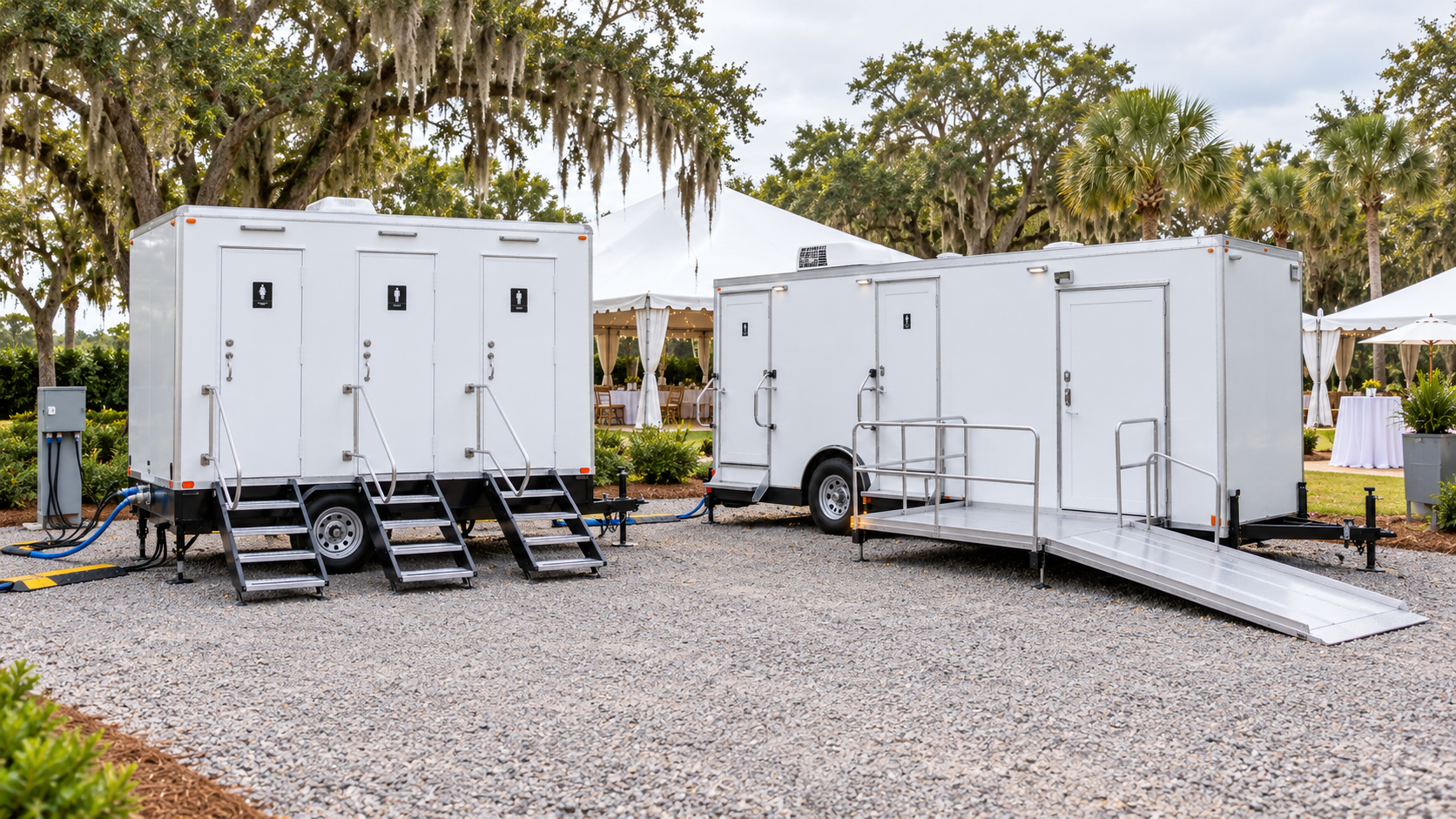
When accessibility is required, include both the unit and the route to it in the plan. Compacted surfaces, ramp clearance, slope, and parked equipment can change over the life of a project. Review our ADA-accessible restroom trailer options when additional entry or interior space is needed.
Choose a stable, serviceable location
Place the trailer on firm, level ground where guests and workers can reach it without walking through active equipment lanes. Allow room for steps or ramps, doors, utility connections, and ventilation. The delivery truck must be able to enter, maneuver, and leave safely.
Service access is equally important. Waste-pumping equipment needs a workable route and hose reach. Freshwater tanks and office-trailer holding tanks must remain accessible for scheduled service. Avoid locations that will later be blocked by materials, fencing, cranes, dumpsters, or employee parking.
Plan for the site to change
Construction layouts evolve. A placement that works during mobilization may conflict with excavation, paving, or building access several months later. Include the restroom and tank area in logistics meetings, and contact the provider before moving any equipment. Trailers and tanks should not be relocated casually or with site machinery.
Verify electrical, water, and waste requirements
Restroom trailers require site-specific utility support. Electrical requirements depend on the assigned unit and may include dedicated circuits within an approved distance. Water may come from a suitable connection or an arranged freshwater tank. Waste may be held onboard or routed to an approved external tank or connection.
Office trailers without permanent utilities often need both a freshwater tank and a waste holding tank. Confirm the fixtures served, tank sizes, expected water use, venting, connection points, and freeze or heat considerations. Freshwater supplied for equipment operation is not drinking water unless a separately approved potable-water arrangement is included.
Do not rely on a trailer model name or a past project’s setup. The assigned equipment and written quote control. Review the restroom trailer utility and site requirements and our office-trailer tank and water service.
Set service frequency from actual use
There is no universal pumping interval. Tank capacity, crew size, shifts, fixture use, water consumption, and temperature all affect the schedule. A unit supporting a lightly staffed office may operate very differently from the same unit serving a busy field crew.
Begin with a realistic estimate and review usage after startup. Watch for faster-than-expected fill levels, odor, slow drainage, low water, or changes in workforce. Never wait for a tank to overflow before requesting service. Scheduled pumping is more predictable and less disruptive than an emergency call.
Multi-shift or seven-day operations may require more frequent cleaning, supply checks, and pumping. See how often a restroom trailer should be pumped for the variables used to build a service interval.
Protect the equipment and the schedule
Assign a site contact who can provide access and report changes. Keep generators, cords, hoses, steps, ramps, and tank areas protected from vehicles and unauthorized adjustments. Tell crews what not to flush; wipes, rags, gloves, feminine products, food, and construction debris can damage pumps and create downtime.
Jobsite restroom planning checklist
Maximum people per shift and expected project peaks
Who the trailer and office fixtures will serve
Accessible-unit and route requirements
Firm, level placement and safe walking path
Clear delivery and ongoing service access
Verified power, water, waste, and tank details
Initial pumping and cleaning schedule
Site contact with gate and access instructions
Plan for weather, outages, and layout changes
Rules for prohibited materials and equipment protection
Build the service plan before mobilization
Share the project address, start date, expected duration, crew count by shift, site plan, utility availability, office-trailer fixtures, and access restrictions. The more accurate the operating picture, the easier it is to recommend equipment and service intervals that hold up through the project.
Explore our construction restroom trailer rentals, review restroom trailer pumping service, or request environmental service. The Flush Crew Co. can coordinate the trailer, tanks, water support, and ongoing service around the jobsite schedule.